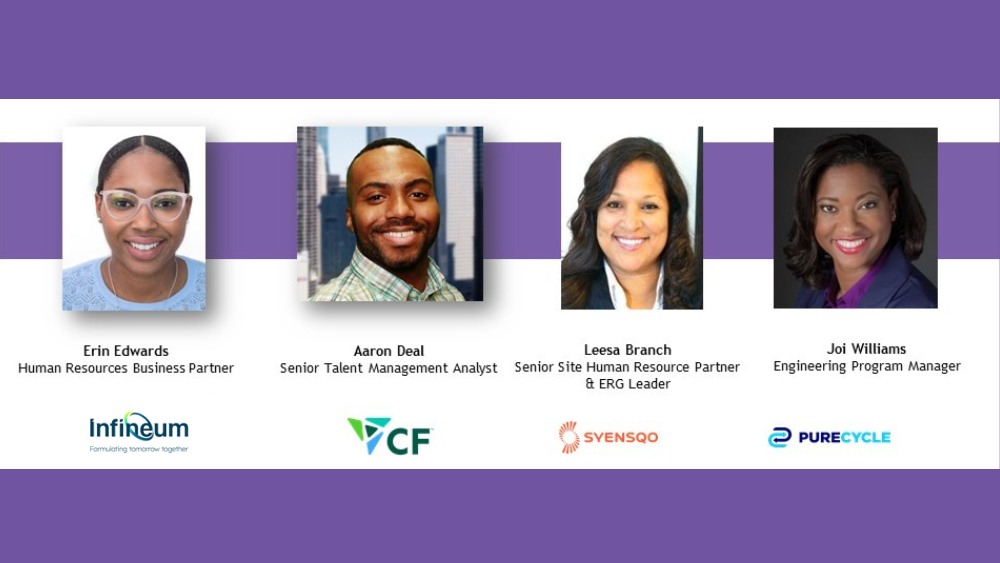
To support scholars during career fair season, FOSSI partners Erin Edwards (Infineum), Aaron Deal (CF Industries), Leesa Branch (Syensqo), and Joi Williams (Pure Cycle Technologies) shared practical strategies designed to help students navigate interviews with confidence, clarity, and purpose.
First impressions matter
"The first thing you notice in an interview is how you enter the room," said Deal. "Confidence, body language, attire—your entire package speaks volumes, even on the phone."
Branch emphasized that preparation is the foundation of confidence. "Have a notebook, know the company, and be ready to answer questions. Remember, an interview is a two-way street—you're evaluating them as much as they're evaluating you."
Edwards cautioned against a common misstep: "Not knowing who you're interviewing with or not knowing the company are big no-nos. Research the people, their roles, and come prepared with talking points."
Master the STAR method
Panelists highlighted the importance of the STAR method (Situation, Task, Action, Result).
"Interviewers want real-life examples—what the challenge was, what action you took, and the result," said Branch. "Always answer the full question using STAR."
Williams added that behavioral interviews follow the same approach. "If you're early in your career, draw from volunteer work, student organizations, or leadership experiences."
Experience comes in many forms
Edwards told students, "Lesser experience doesn't mean you don't have life experience. If you've done your research, you should know what competencies they're looking for—time management, resilience, and adaptability. Then provide a real-world example from your life that connects to these competencies: I have 6 brothers and sisters, I'm in band, I'm in the math club, I work at McDonald's."
All the panelists underscored the importance of practice. Deal cautioned, "If you go into an interview and are overly nervous, you haven't practiced enough. AI is a great tool for practicing."
"Tell me about yourself"
While it may seem straightforward, panelists agreed this question often trips candidates up.
"Breathe life into your own resume—own who you are," says Deal. "Interviewers don't want a list of jobs. They want to understand the characteristics that make you, you," Williams noted, adding, "Make sure to keep your answers focused and concise." Edwards advised scholars to connect their story to the role: "Use the job description to highlight skills and characteristics that align with what they're seeking."
Panel interviews: make the connection
Panel interviews are often used for full-time roles. "Each panelist is listening for something different," said Branch. "Understand their roles and tailor your responses so each person can see your value." Williams agreed: "You want everyone to leave feeling you're the right fit."
Before, during, and after the interview
Before:
- Research the company and interviewers on LinkedIn
- Use campus career services and practice with mentors or peers
- Prepare thoughtful questions about culture, growth, and learning opportunities
During:
- Dress professionally and ensure a clean virtual background
- Take time to think before answering
- Ask for clarification if needed
After:
- Send a thank-you note within 24 hours
- Reference specific moments from the conversation and express your enthusiasm for the role
Resume Tip: Maintain one strong base resume and tailor it with keywords from each job description to increase visibility.
Join us in shaping the future of STEM. Discover how your company can create a lasting impact on tomorrow's leaders as a FOSSI sponsor.